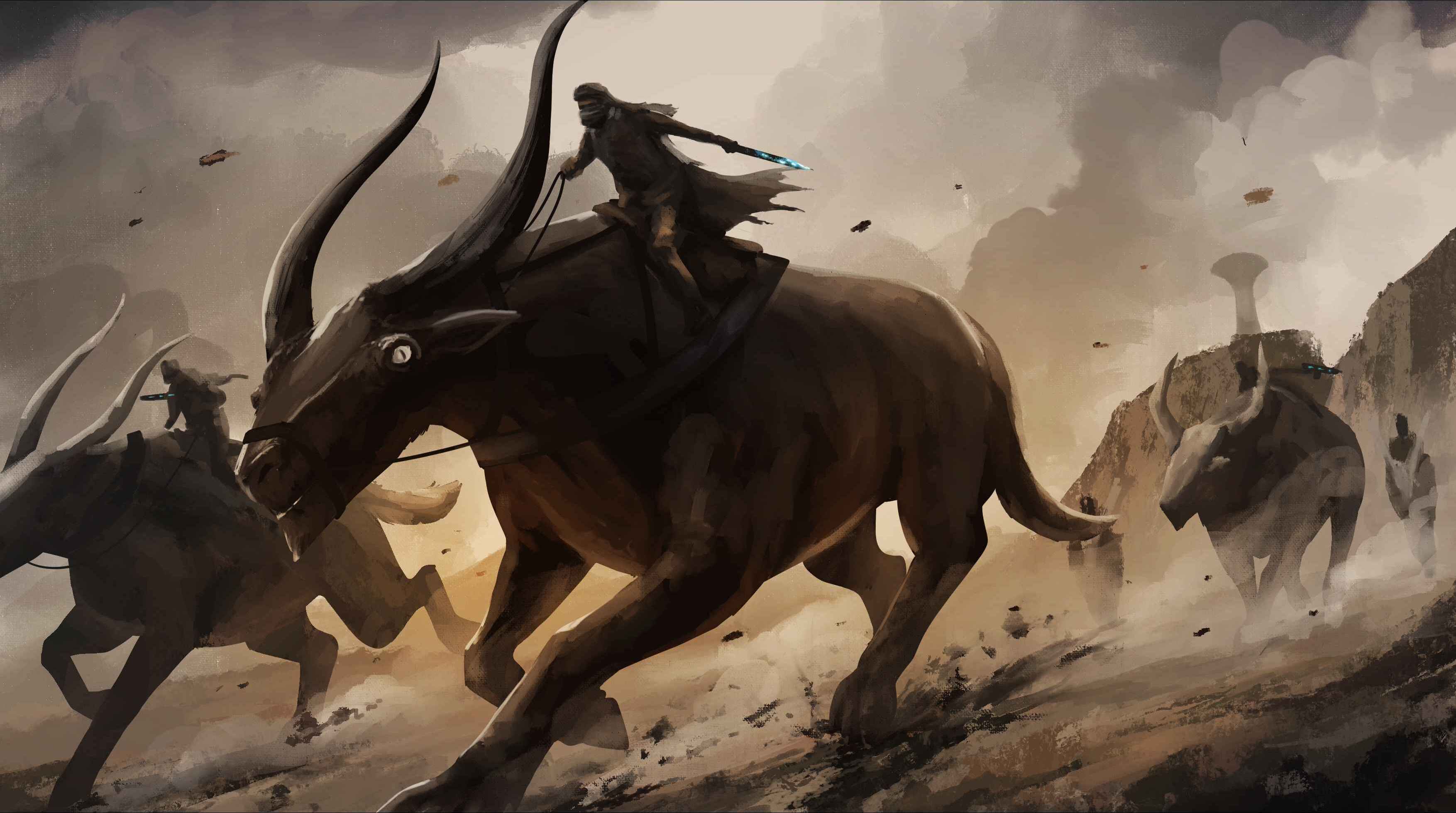
Softbelly Blackclaw
Deep trench ambush predator
Overview
The Softbelly Blackclaw is a solitary ambush predator native to Geba's deepest trenches and subsurface caverns. Its namesake comes from its pale, vulnerable abdomen contrasted by jet-black armor plating and hooked claws capable of piercing bedrock. The species is immortal and shows no sign of biological aging in any observed specimen. Its population spans the full subterranean network of the planet, from shallow cavern systems to the deepest ocean trenches.
Standard Variant
Most Softbelly Blackclaws do not grow beyond 4 meters. These are the specimens most often encountered on subsurface expeditions and in cavern exploration, and even at this size they have caused numerous expedition fatalities since the species was first cataloged during the Era of Absolute Expansion. Bioluminescent eyes let them navigate in complete darkness, and the eyes reflect faintly just before an attack, which is often the only warning a target receives. At this size the eyes are small and easy to miss, so the creature is usually upon its prey before the prey knows it is there. The Blackclaw keeps the populations of subterranean fauna such as the Neron in balance, as the apex predator of ecosystems that have no light and no other regulatory mechanism.
Seabelly Variant
Ancient specimens have been found at sizes so large that they were first mistaken for terrain features. These are the Seabelly variant, found at the bottom of the deepest ocean trenches and approaching 40 meters in length. Where the standard variant's eyes are small, the Seabelly has unsettlingly large eyes beneath transparent shielding, visible from a considerable distance in the darkness of the deep ocean. An encounter with one unfolds slowly: what appeared to be the ocean floor turns out to be watching, and to have been watching for longer than the observer had been aware of it. Because the Seabelly is immortal, the largest specimens have been growing for an unknown length of time, and the upper limit of their size has never been established, since no expedition has reached a depth where the species ceases to exist.
Self-Destructive Defense
The species has a self-destructive defense reflex that destroys its own vital organs on death. This makes study of dead specimens nearly impossible, because the internal structures that would reveal the most about its biology are gone before any examination can take place. The reflex also makes the jet-black armor plating and hooked claws extraordinarily difficult to harvest intact, which is why materials from the creature command extreme prices in covert markets, where the armor is shaped into projectiles and the claws are used as penetration tools.