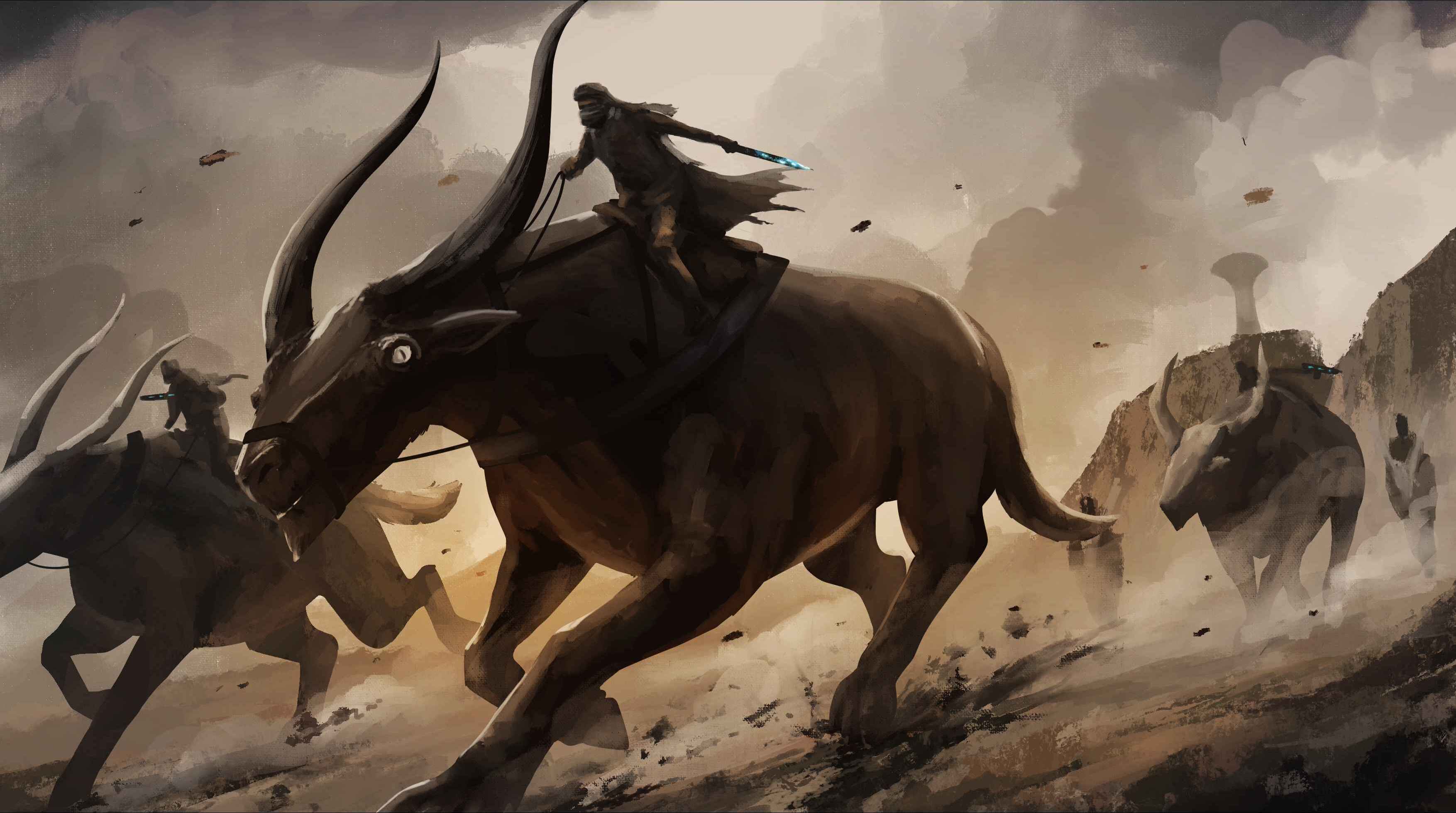
Ngorrhal Ice Bear
Ngorrhal glacial predator
Overview
The Ngorrhal Ice Bear is the most dangerous creature on Geba, by so wide a margin that no other predator on the planet belongs in the same category. Its head is larger than a Frost Sentinel's entire body, and it overpowers packs of Greater Smilohounds. Its pale or mottled grey fur blends into rocky outcrops and snow mounds, and it ambushes silently from ridgelines and crevasses.
Growth
The ice bear never stops growing. A mature specimen of several hundred years stands approximately 6 meters when reared and weighs between 8,000 and 12,000 kg. Ancient specimens that have lived more than a thousand years approach 9 meters and can weigh upward of 25,000 to 35,000 kg. The oldest bears still hold the territories they claimed centuries ago, and those territories are so vast that whole expeditions cannot cross them, because the bear decides what moves through its land.
Intelligence
Its intelligence goes beyond predatory instinct. It targets humans specifically, even where megafauna would provide far more sustenance for less effort, and it kills without feeding, which suggests the killing serves some purpose other than food. Researchers have described this as sport-like behavior, and it has baffled them since the species was first documented; no consensus exists on what drives it. The bear identifies, tracks, and kills human parties with a methodical patience that implies planning, and it blends into terrain so well that even keeping a considerable distance is a gamble.
Hunting
The only successful ice bear hunts in recorded history have been carried out by groups of post-service Assault-Class Engineered who specifically seek out the much larger males, and these hunts are rare enough to be notable. Ice bear fur makes the most valuable coats and headpieces on the planet. Its bones are made into decorative ornaments so expensive and so rare that owning one places the owner in a class of wealth most people will never see. That demand sustains a poaching economy that regularly kills natural-born hunters without the physical capability to survive the encounter.
Destroyer-Class Coexistence
The Destroyer-Class Engineered are the only group on the planet known to live in ice bear territory and survive without issue. Whatever calculation the bear makes about everything else that enters its territory, it makes a different one about the Destroyer-Class. Whether this is recognition, respect, or something else is unknown. The result is coexistence, and the ice bear coexists with nothing else on the planet.
Restrictions
The ice bear is banned from the Yuvaar Hunting Games after fatal events made the disparity between the creature and any human participant, natural-born or Engineered, impossible to justify as competition. Field guidance is simple. If ambushed, stay perfectly still. If detected on open ground, retreat to confined terrain such as caves or ruins, where the bear is too large to maneuver. Firing at it on open ground is certain death.