Inland Thazvaar
The Unsolvable Problem
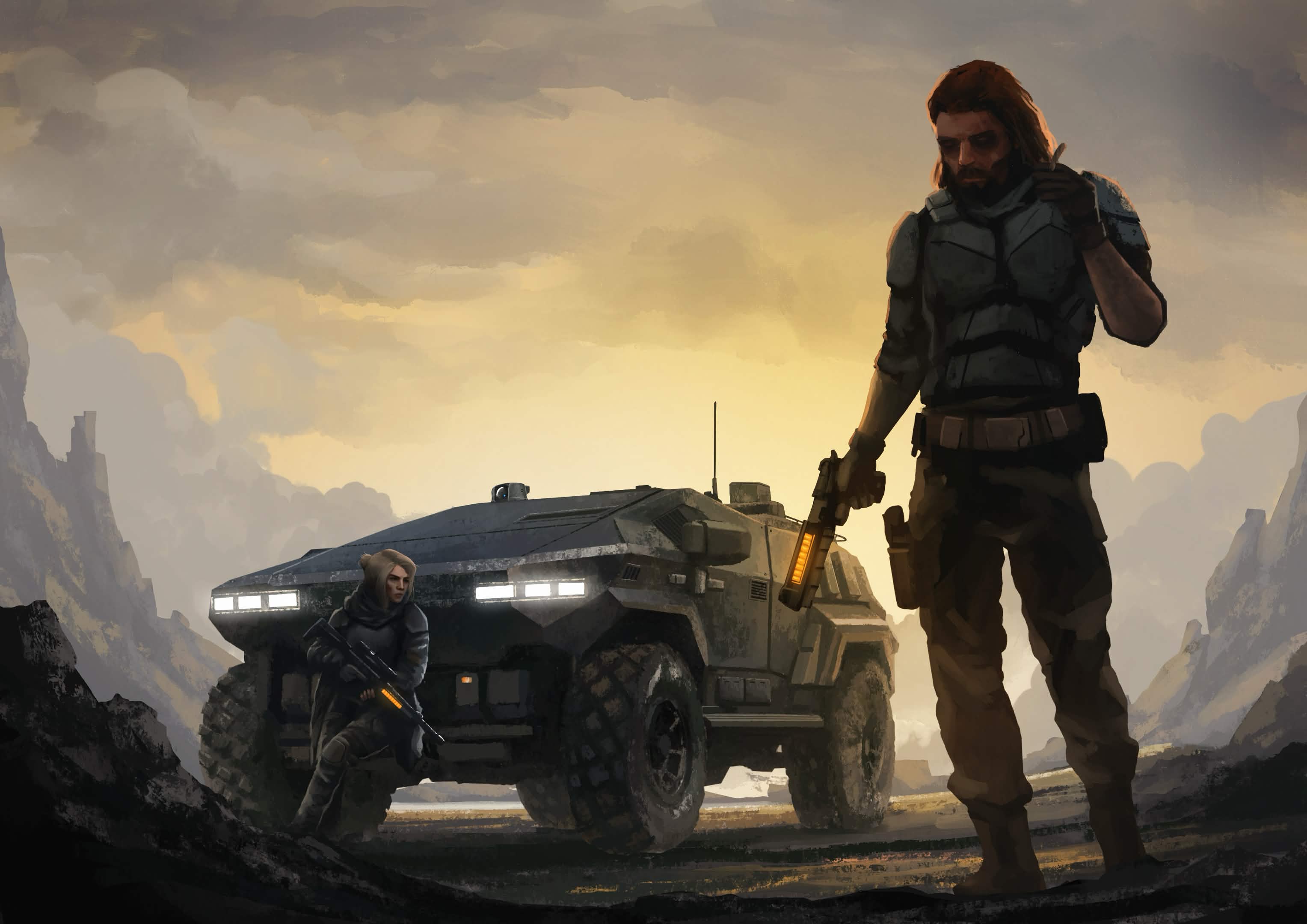
Inland Thazvaar is the immense, ungovernable heart of the planet, and it is a terrible place. Its scale alone defies control, fractured into deserts, jungles, and mountain ranges that swallow armies, relays, and intention alike. The problems here predate the Thazvaari Dominion and outlasted its fall, and even the Geban Empire at its height could not pacify it. For much of imperial history the capital believed the inland was as settled as the coast, until Prince Ashan'Raeth Vareth crossed it and proved that belief false.
Relays decay, airships vanish, and syndicates rule through constant war over territory, energy, and trade routes. This is the primary theater of the Energy Wars, the managed permanent conflict that generates revenue and upward mobility: a corridor opens, a relay goes up, and if it holds long enough to anchor it becomes a hub, then a clearing, then an economy, while the same contract boards that fund one crew may be bankrolling the one across from it. Imperial law is stretched so thin here that it simply does not reach. And all of that describes only the open inland; the deep interior, the far center, is a harsher country still, one no power in recorded history has ever entered and held.
Belief here is doctrine turned to survival. The Teytan, a separatist state of thirteen million, applies the First Doctrine of Blood Royal literally, recognizing no one outside its borders as having any standing at all, and runs the largest trafficking networks on the planet under that logic. The Jerhit Syndicate holds the southwest, the Children of Kharan move most of the inland's illicit goods, and the Church sends small armed teams after ruins and artifacts.
Among the civilians crushed beneath all of it, a real share quietly want centralization, not out of ideology but because they want someone, anyone, to come and destroy the syndicates that own their lives. No power in recorded history has ever governed this place. The Dominion could not. The Empire at its height could not. Scale and terrain make it unsolvable, and everyone who lives here knows it.
Tolargthe only safe city of the inland
Tolarg was built by Emperor Venar'Tal Kareth to honor his father, the old inland imperial capital from when the Empire still believed it would bring order to the interior. It is the only city in the entire inland considered safe. Its defenses are massively oversized, its people covered by constant Scout patrols even far out in the distance, and it sits between two great arrays that reach the coastal networks. It is the imperial dream of order, surviving in a single defended point on an ungovernable continent.
Nethelysthe ancient mega-hub
Nethelys is one of the oldest Thazvaari cities, its name echoing the old Dominion queens, and it is now the critical relay hub that ties Tolarg's arrays into the coastal networks. Ancient, austere, and indispensable to modern connectivity, it is old Thazvaari stone carrying the signals of the present world.
Terraveththe dead city under the contested spine
Terraveth was annihilated some eight thousand years ago when a Terraveth Behemoth surfaced through its buried eggs. A mega-spine was later raised over the ruin, and it has been fought over ever since: an irreplaceable relay standing on a legendary graveyard in active Behemoth burrow territory, a perpetual warzone above a mass grave.
Jerhitathe untouchable
Jerhita is where the Jerhit Syndicate originates, so isolated in the inland that even the Dominion never controlled it. Jerhita is the final major settlement before entering what is considered the Deep Inland. Private relay tech, hidden opulence, the syndicate palace and everything beneath it, wealthy and self-contained and untouched by the Geban-Thazvaari War, the Fracture, and the Warlord purge alike. Nothing on the planet has ever reached it.
Feraazthe watching city
Feraaz was founded by Imperator Kenez'Feraaz, architect of the Bare Hand, where inland lawlessness meets assimilated territory. Visitors say people do not speak in its streets, and that you feel watched from the buildings. It was built in the image of the man who made the art of the unseen operative, and it feels exactly like that inheritance: silent, surveilled, eyes behind every window whether they are real or not.
The Deep Inlandthe far center, not a direction
Deep Inland is not a compass point, it is the far center of the continent, ground so distant from any coast that anchoring permanent infrastructure is impossible. No relays hold there and nothing stays, and it runs far hotter than the open inland already is, exposed to Izhara for enormous unbroken stretches, with mountain ranges that erupt straight from the sand and swallow the horizon. By every measure available it is the harshest inhabited ground on the planet, if it can be called inhabited at all. The open inland is a punishing desert; the deep inland is a different order of thing.
At its heart lies Thazitan, pre-human ruins that seem older than humanity, tied to canyons and caverns thought to descend toward the Uncharted itself. Haavu Project Permeance works those canyons in the belief that they reach the Uncharted through the interior, and the Church sends small teams after whatever the ruins hold. Everyone else stays out.
Surface time is measured in minutes, not hours. Contractors who have worked it describe the heat as cooking starting at the feet, working up through even the best protective layering, with gloves beginning to scorch on contact and most surfaces turning untouchable within an hour of direct Izhara exposure. Supplies deplete faster than the body can be resupplied, which is the real limit on any deep-inland operation: crews plan for how little surface time they can survive, not how much ground they can cover. The subterranean caverns run cooler, but the heat pools and thickens instead of venting, thick enough that unprotected rest underground is impossible; nothing survives it without shelter in a vehicle carrying proper thermal cells.