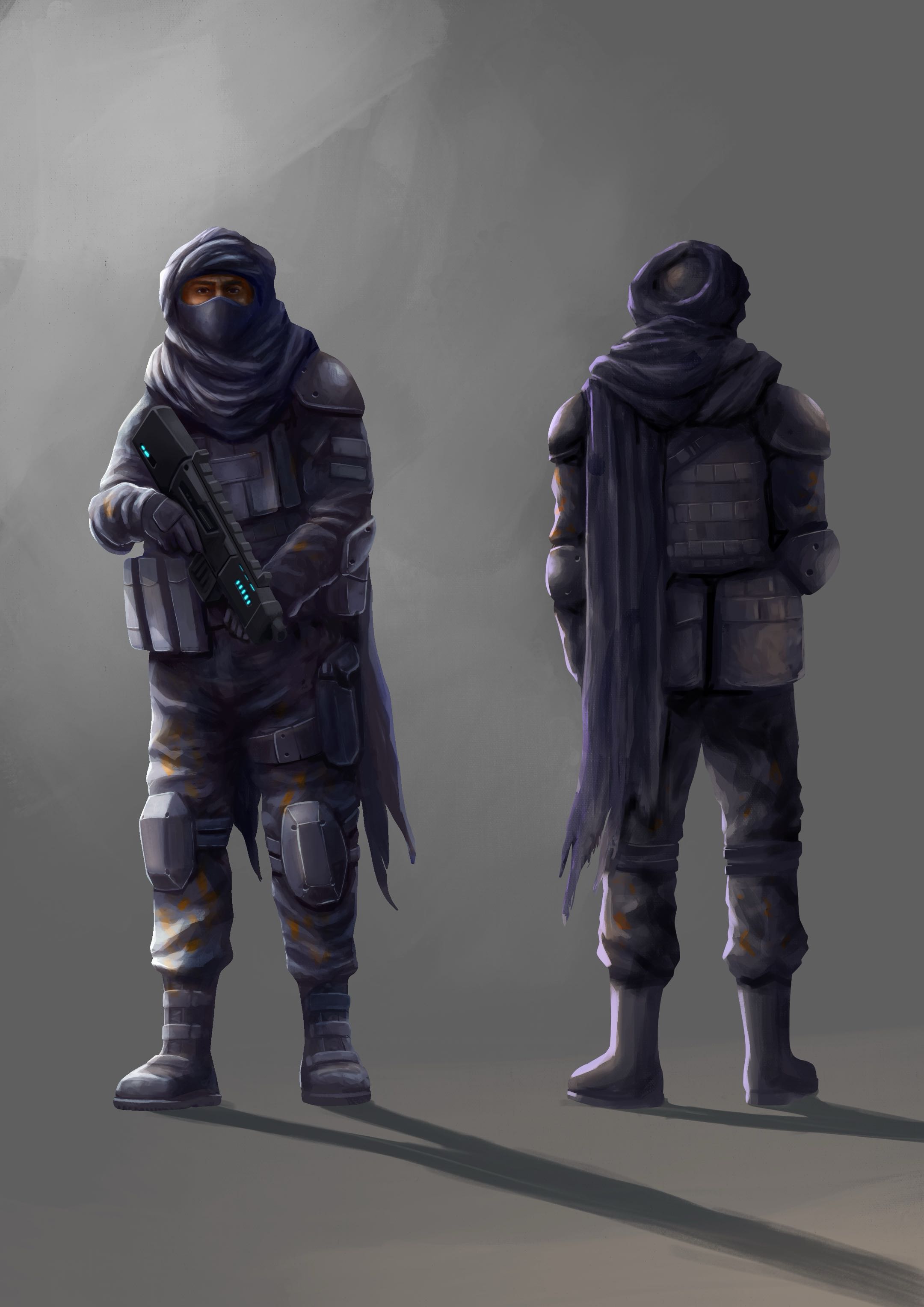
Severan
The Warrior Interpretation of the Seraveth
Belief
The Severan is the old Dominion's understanding of the Seraveth, carried forward through thousands of years of war and adopted by nearly every warrior and fighter circle on the planet. It worships the Seraveth directly, but its interpretation of what the Seraveth represent is nothing like the imperial version. The empire reads the Seraveth as gentle balance, quiet stability, the invisible hand that keeps systems from tipping. The Severan reads them as correction. When something on Geba falls out of alignment, violence is what puts it back. In the Severan reading, the Seraveth remained in the Infinite because they were already aligned. Alignment on a world shaped by Velcrith ambition and six thousand years of empire requires force.
Severan practitioners see themselves as the instruments of that correction. They treat the Blood Royal and Veyan Thought as foundational to war, texts that explain why the fighting exists and what it serves. They view violence as the directional will of the Velcrith expressed through physical action and the restorative balance of the Seraveth maintained through the outcome. Both functions operate simultaneously every time a battle is fought. Which side they are on and whom they are fighting do not matter to them. What matters is whether the violence is pushing the world forward and pulling it back into equilibrium at the same time.
Paragons
The figures the Severan hold as paragons are all individuals whose violence reshaped the world: Emperor Venar'Tal Kareth, who conquered Thazvaar and ended a centuries-long war through total commitment; Kharan Khatan, the pirate warlord who held together a dying fleet through nothing but inevitability; War Chief Tharyn'Bregun, who secured the Ngorrhali alliance through combat and died alongside the prince he bonded with fighting Ukhaal Walkers; and Brannok'Drekan, whose name carries weight in corridors where reputation is earned by surviving what others do not. None of them are heroes in any conventional sense. The Severan hold them up as proof that violence, applied with total commitment, changes the shape of the world permanently, and the faith judges a change only by whether it was real.
Mastery
There are no better combat practitioners on the planet. Severan fighters understand small arms, heavy weapons, vehicle-mounted systems, and massive airship arrays with equal depth. They excel in hand-to-hand tactics and rope manipulation. They understand their own bodies the way the Saodeh understands theirs, but where the Saodeh trains the body for the hunt and refuses war, the Severan trains the body for the fight and refuses nothing. They know how to use fauna and terrain as tools when vehicles fail. Children raised in Severan households grow up immersed in the weapons, the martial arts, the discipline, and the music from the moment they can observe the world around them. None of this makes them soldiers; it is a way of life, and by the time they are old enough to choose their own path, most continue because they have grown up understanding what the body and the mind are capable of when both are trained without interruption. Those who choose differently tend to find their way into sporting events or into managing athletes and entertainers, treating the entertainment world as a different kind of battlefield and applying the same discipline their families carry in corridors to the business of spectacle and competition.
Severan practitioners rarely retire. They live their entire lives in battle, moving from corridor to corridor and contract to contract. They are found wherever there is fighting because fighting is where their faith tells them to be. When a Severan dies, they die in the field, and the community that carries them forward marks the death without mourning and accepts that the correction the Severan was performing is now someone else's responsibility.
Discipline
The Severan reject polygamy outright. On a planet where the gender ratio sits at 25:1 and polygamous arrangements are the norm across nearly every population, this is a deliberate and visible refusal. A Severan takes one partner and keeps that bond for life. Before they are even permitted to begin looking for a mate, young men and women must complete a rite of passage that proves they are ready to carry another person's life alongside their own. The specifics of the rite vary by community, but the principle is consistent: if you cannot demonstrate that you are capable of sustaining something beyond yourself, you are not ready to try.
This discipline extends through the entire structure of Severan life. The faith produces people who are violent by profession and rigid in their personal conduct, and the combination is what makes them trusted in corridors where trust is worth more than currency. A Severan contractor will fight for whoever is paying and switch sides without hesitation if the balance demands it, but they will not lie about their terms, they will not abandon someone they have committed to protect, and they will not break a bond they have made outside the battlefield. Their violence is total and their personal code is absolute, and both come from the same source.
Adoption
The Severan is popular among members of the New Emperor's Wrath, the Children of Kharan, independent mercenaries, and Frost Sentinel descendants. A significant number of Assault-Class and Tactician-Class Engineered follow it as well. Feral Remnant is its music, blasted on battlefields and in corridors, stripping identity down to instinct and priming the body for what the faith demands.
Many contractors who spend enough time in corridors end up adopting Severan beliefs without realizing it. The faith has no recruiters. A person fights long enough on the front lines, watches enough battles correct imbalances that diplomacy could not touch, and eventually the pattern becomes undeniable. By the time someone tells them the name for what they already believe, they have been living it for years. The faith spreads through the experience of the corridors themselves.