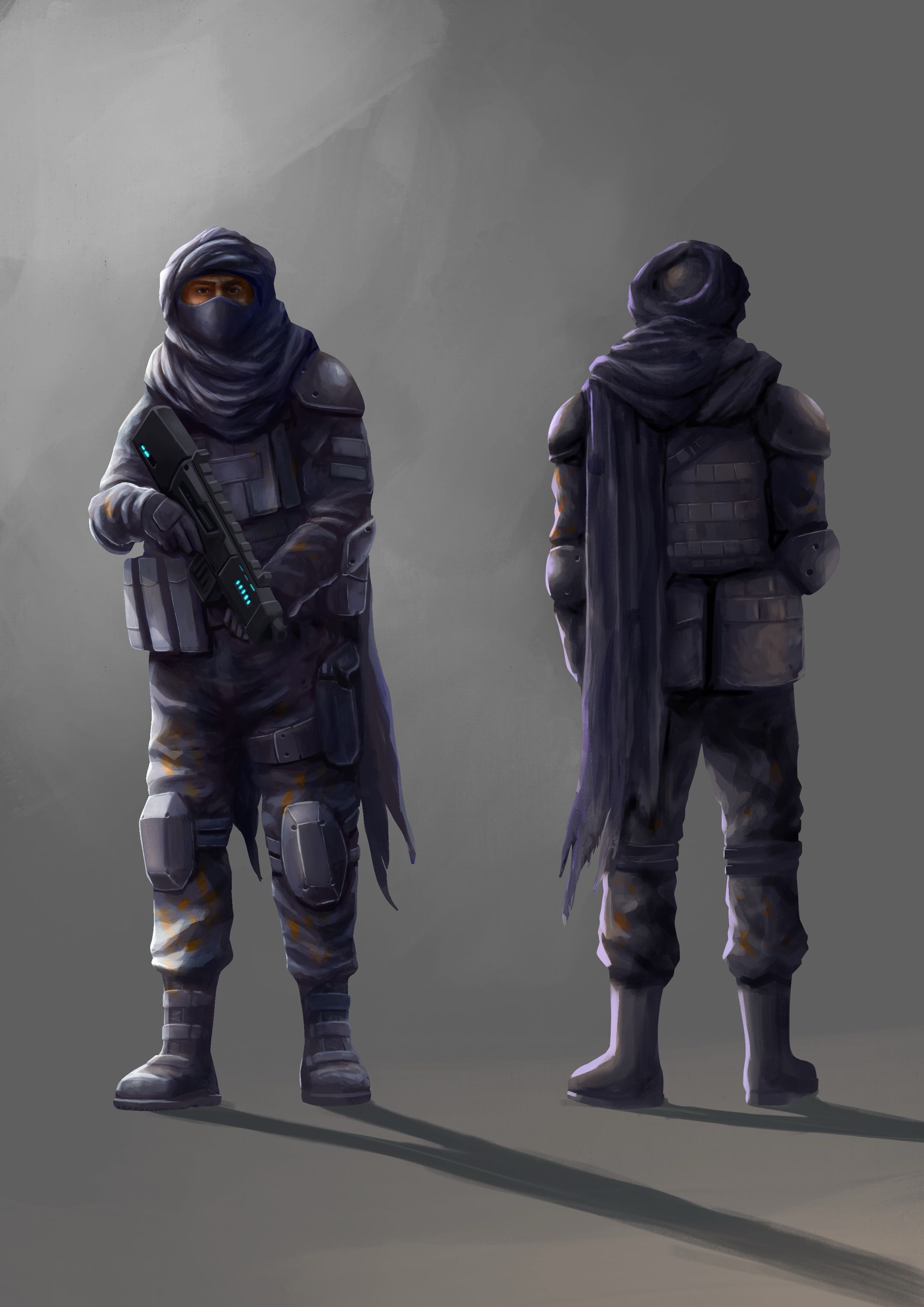
Suhu Pirate Republic
Naval Pirate Republic
The Suhu Pirate Republic is one of the smallest powers on Geba and one of the few that no one at sea can afford to ignore. It holds only a handful of islands and its population is small, yet its fleets dominate the waters around Berinu and the Berinu Islands, through Maor's Passage, and across half of the Geban Sea. Every route that crosses that water crosses Suhu water, and the Republic has held it for longer than anyone has kept a record of who held it before.
Its size and its reach have never matched, and that mismatch is the key to understanding it. The Republic has never tried to rule land beyond its own islands or to collect the kind of population that would make it a state in the imperial sense. What it holds is the sea itself: the lanes, the currents, the approaches to the islands, and the knowledge of where a ship can pass unseen and where it cannot. That knowledge has made it a pirate power, an imperial ally, an escort, and an enemy, often to different people at the same time.
Rising From the Docks
Before Suhu was a place, the islands were simply home to the native people of the region, who did not yet have firearms. When the early Thazvaari Dominion discovered them, it used the islands to pull resources and as a source of slave labor, working the land and the docks with the people who had lived there first.
The revolt began at a single port. Once it had succeeded there, its leaders understood that stopping would be the end of them, because the Dominion would come and destroy them all. So they took every ship docked in the port and made the naval slaves show them how to work them. None of them knew how to navigate. They would drift out until they sighted Dominion ships, attack, kill everyone aboard, and turn back for home before the islands were lost behind the horizon. By the time the Dominion understood what was happening, they had taken more than five hundred ships and taught themselves the basics of navigation.
From there they robbed ships everywhere they could reach. In the course of those voyages they found Therik, and there they made friends where they might have made victims. The port where the revolt began became Suhu, and everything the pirates took and learned came back to it. The origin of the Republic and the rise of Suhu into one of the largest ports on Geba are the same story told from two ends: the stolen fleet made the port, and the port kept the fleet.
Waters Held
The Republic's waters begin at the Berinu coast and the archipelago and run outward through Maor's Passage into the Geban Sea, covering roughly half of it. These are some of the most heavily traveled waters on the planet. The Berinu Islands are the hub through which nearly every route from west to east must pass, and Suhu, the port that grew from the Republic’s founding, stands on that crossing as one of its great trade hubs.
Suhu and the islands around it are two different worlds. Suhu is open water and open trade. The surrounding islands of the Republic are another story entirely. Their ports and the waters immediately around them are treated as territory in the strictest sense. A ship that crosses the open sea under Suhu watch is usually left alone. A ship that wanders into the approaches of one of those islands has entered the one place the Republic defends without exception.
Safe Harbor at Suhu
For all its pirate origins, Suhu is one of the safest places on the planet for a trader to be. The culture of the revolt never left it. The stories of the stolen fleet are still told, the Republic’s fighting traditions are still taught, and the port still carries itself like a place that answers to no one. What it does not carry is danger. No pirate strikes in the immediate waters of Suhu, because no pirate who wants to keep sailing would try, and the Republic’s own crews treat the port as the one place their reputation is spent on protection instead of fear.
The port has known war. In the Warlord Eras Suhu became the first true warzone, and when the mega-spine at the center of the Berinu Islands was destroyed it lost every signal and went dark. In the modern era that history feels distant. There is very little fighting in or around the port, and the Energy Wars are far removed from its docks. The wildlife of the surrounding waters and shores, so dangerous across much of Geba, is tame enough that it rarely troubles anyone working the harbor.
Even the voices make it easy. The whole planet speaks the same Geban language, though it sounds different from one region to the next, and an accent that is ordinary in one port can be hard to follow in another. In Suhu the accents of every region meet and wear against one another until the speech of the port sits in the middle of them all, balanced enough that a trader from nearly anywhere can be understood without effort. Crews come from every coast on the planet, and few of them leave feeling like strangers.
War Without a Beginning
The Suhu Pirate Republic and the Children of Kharan have been at war for so long that no one alive can give a date for when it began or a reason for why. Neither side records an opening battle, a broken agreement, or a founding insult. The war simply predates every account of either of them, and each generation inherits it the way it inherits the islands and the boats.
The two could hardly be more different. The Children of Kharan are a confederation of desperate crews held together by nothing but the absence of a better option, numerous, disorganized, and loyal to no one. The Republic is small, disciplined, and bound to its own people and its own water. The Children raid anything that moves. The Suhu choose what they take and from whom. Whatever started the war, its continuation needs no explanation to anyone who has watched the two meet at sea. Wherever the Children reach Suhu water, the Republic answers, and it has been answering for longer than history has been keeping count.
Service to the Empire
Where the Children of Kharan are universally hated, the Suhu are the one pirate power remembered for standing with the Empire. During the Geban-Thazvaari War, the Republic supported the imperial campaign against the Thazvaari Dominion, and its part in that war was pivotal. For a people whose ancestors had been worked as slaves by the Dominion, the choice of side needed little explanation. Suhu crews found the naval routes the Dominion was not guarding heavily, passages through waters no imperial chart had ever recorded and that only people who had lived on that sea for generations knew could be crossed.
The Dominion's strength lay in its fleets, its rail networks, and its fortified positions, and its seas were its first line of defense. The routes the Suhu opened let imperial forces move where the Dominion did not expect them, at a time when the war was being decided by who could reach the Gulf and who could return from it. That service is the reason the Suhu occupy a place in imperial memory that no other pirate power has ever held, and it is the reason a citizen of the Empire who has heard of the Suhu at all expects them to stand against the Children rather than beside them.
Conduct at Sea
In the modern era the difference between the Republic and the other pirates of the planet is visible in how it treats the ships that cross its water. The Children of Kharan will raid anything. The Suhu typically leave vessels alone. Traders, transports, and passenger craft cross Suhu water every day without incident, and many of their crews never see a Suhu ship at all.
Some traders go further and hire Suhu escorts for the crossing. A cargo ship with a Suhu escort is one that the Children of Kharan and lesser raiders tend to leave alone, because the escort knows the water better than anyone attacking it and fights better than anyone hired to defend it. Escorting is occasional, and the Republic decides for itself whom it will protect.
The exception is territory, and it lies beyond Suhu. A vessel that wanders into the approaches of one of the Republic's surrounding islands, or into one of their ports, is treated as a vessel that came looking for a fight. The Republic's reputation for restraint on the open sea and its reputation for violence at its own shores are both deserved, and both serve the same purpose. Everyone at sea knows exactly where the line is.
Fighting on Moving Ground
Suhu fighters are counted among the most dangerous on the planet. Their methods are ancient, older than the Republic's war with the Children, and they evolved for the places where the Suhu have always fought: decks that pitch beneath the feet, gangways and hulls slick with spray, holds and passages too tight for a weapon to be swung or a rifle to be brought fully around. Every part of the technique is built for efficiency on unstable surfaces and in close environments.
The result is a way of fighting that wastes nothing. Suhu fighters move without visible effort, each shift of weight flowing directly into the next, so that balance is never lost and never needs to be recovered. They close distance quickly, fight at the range where most weapons stop being useful, and rely heavily on throws, locks, and strikes delivered from positions a fighter trained on solid ground would not think to use. Many fight without armor, trading protection for the freedom of movement their methods demand, and the thickened, misshapen ears common among them are the mark of a lifetime of grappling on wooden and metal decks. A fighter who carries those signs, fights bare, and moves with that kind of ease has, at the very least, spent long years among the naval pirates of the Berinese islands.
Standing Among Pirates
The Suhu Pirate Republic is called a pirate power because it holds the sea by force, answers to no law but its own, and takes what it chooses from those who cross its territory. It is also the only pirate power whose name is spoken with respect in imperial history, the only one whose escorts are sought by honest traders, and the only one the Children of Kharan have never been able to wear down. It remains small, it remains on its islands, and it remains in command of more water than most nations will ever see.