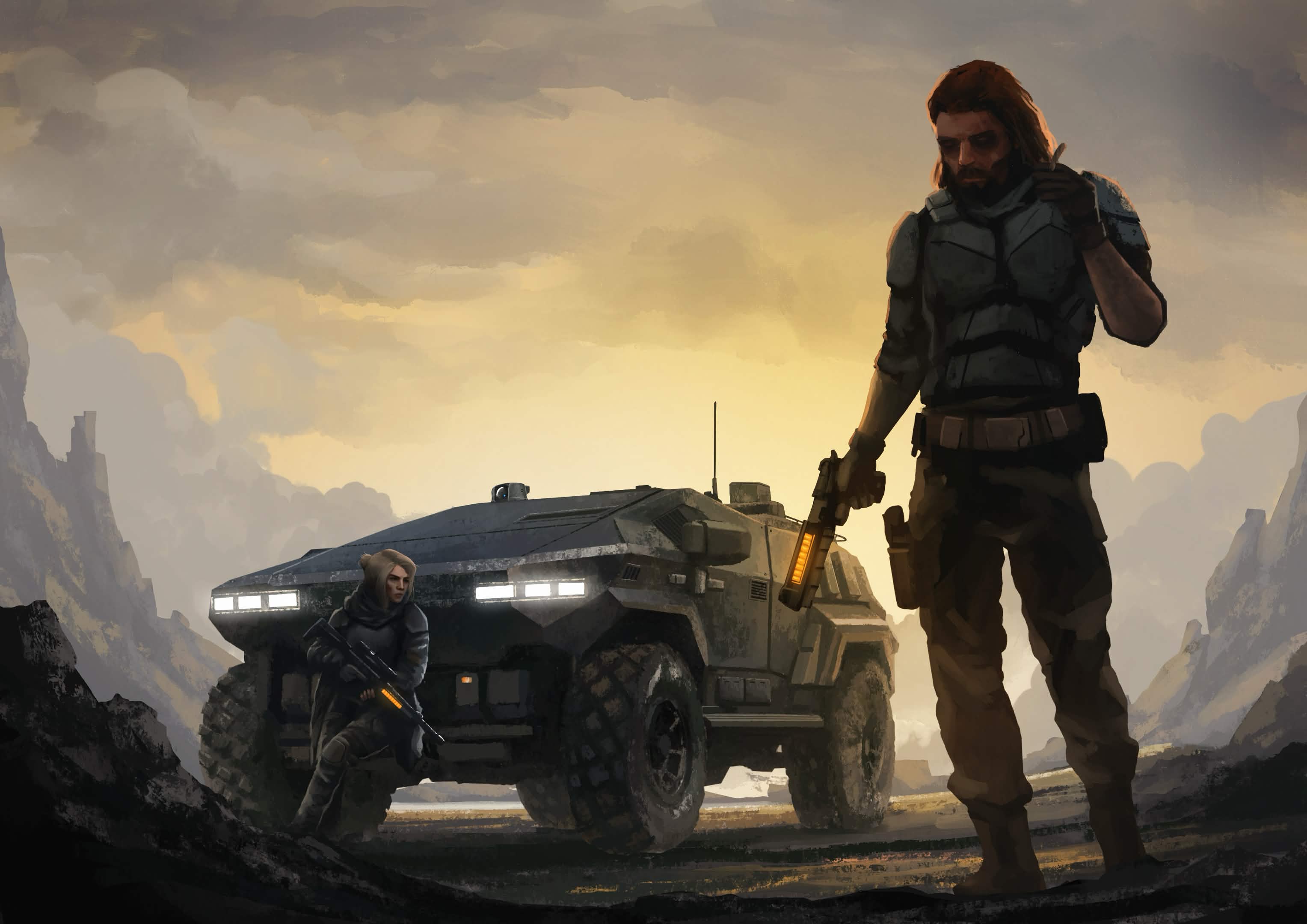
Tharyn'Bregun
War Chief of the Frost Sentinels
Tharyn'Bregun was born under another name, lost to history after the assimilation of Ngorrhal into the Geban Empire. He gave it up willingly and took the name Tharyn'Bregun as a sign of what he believed: that the identity of a people lives in its actions and in survival through moving forward.
Civil War and Alliance
Bregun rose to prominence during the Ngorrhali civil war that divided the mountain passes. He worked directly with the empire, and with Vaer'gidon in particular, to push back the Northeastern Pass Frost Sentinels and remove them from the continent completely. The campaign brought peace to Ngorrhal for the first time in generations. Where others saw foreign conquerors, Bregun saw an opportunity to end a war his people could not win alone.
He also gave the empire accurate maps and viable transportation routes through Ngorrhal and along the borders of Ukhaalstaag and Kela, knowledge the mountain peoples had closely guarded for centuries. Communication with the imperials was difficult at first, because he struggled greatly with the Geban tongue. Gidon, however, had held a personal interest in the Frost Sentinels long before imperial involvement in their civil war and had already dedicated scholars to translating their language. Through those translators Bregun and Gidon communicated effectively, and the alliance held where it might otherwise have fractured over misunderstanding. The two became close friends. Gidon was the only imperial who matched the Frost Sentinels in build and temperament.
Relays in Ngorrhal
When imperial engineers arrived with relay technology centuries ahead of anything Ngorrhal possessed, Bregun was the one who explained to his people what the relays were and what benefits they would bring. His word carried weight. He was a proven leader, deeply respected, and massive even by Frost Sentinel standards, and his size reinforced his authority in combat and in counsel alike.
Because of his advocacy, Ngorrhal would eventually host several of the largest and highest relays on the planet. The continent became the home of experimental relay technology, a distinction that endures into the modern era. Technology that could have been rejected as an imperial imposition became a source of Ngorrhali pride and advancement.
Challenges
Not all accepted his decisions. Several Frost Sentinels challenged him for allowing their identities as a people to be changed and for surrendering their names, their independence, and their way of life to foreign rule. In Frost Sentinel culture a challenge could be issued anywhere at any moment: on ice, on a path, in a field. Bregun met every one, sometimes in single combat and sometimes against three at once, and he never lost. Those he defeated always became his strongest supporters once they had lived long enough to see the truth of what he believed.
Capital and the Sentinel District
Emperor Vaer'karesh personally invited Bregun to the capital for a single purpose: to ask him to convince his son Gidon to take the throne. Bregun refused. He knew Gidon, and he knew it would never work. The answer hurt Vaer'karesh but did not upset him, and he accepted it with respect. He had asked because he trusted Bregun's judgment, and that judgment had been honest.
During that same visit, Vaer'karesh disclosed that he was having a Sentinel district built in what would soon become the capital. He wanted Ngorrhali officials to live there and have permanent representation at the heart of the empire. When Bregun asked who should be sent, the emperor offered guidance that would shape Ngorrhali governance for millennia: "Send those who you trust with different tasks, but none who are all the same. Those who represent your people and the future." The emperor kept his word, and he died soon after.
Death and Memory
Less than a decade later, Bregun and Gidon fell together in a frontier skirmish against Ukhaal Walkers during their bonding trials. Their shared death made an already solid relationship between imperials and Ngorrhali unbreakable. Empress Vaer'yinda commissioned a massive statue of Bregun and Gidon shaking hands at the entrance of the Sentinel district, where no one entering or leaving can miss it. It stands there still.
To the Frost Sentinels, the name Tharyn carries the same weight as Vaer does to imperials.