Energy Wars
Era of Shadow Rule to Modern Geba
The Energy Wars began during the Era of Shadow Rule as the global economy expanded and manufactories needed new markets for commoners in territories beyond established relay coverage. A corridor opens into contested ground, a relay goes up, and if it holds long enough to anchor, that relay becomes a hub. A hub draws trade, and trade draws civilians looking for work and opportunity. Clearings form around the infrastructure and need services, security, housing, and supply lines of their own, so what begins as a skirmish over an energy source becomes an economic anchor for generations. The conflicts generate revenue, give people a way out of poverty, and let the manufactories reach objectives that would otherwise require formal wars. They have never stopped.
Joxi and Sentinel control over seventy percent of all accessible energy on Geba. The remaining thirty percent is ground for constant covert conflict between Haavu and Zhikhan, who fight openly over sources even near established energy centers. Both attribute these clashes to terrorists or criminal warlords regardless of evidence. Joxi and Sentinel may operate under Solarn in the same region, their contractors sharing objectives at different rates. Haavu and Zhikhan are almost never seen working together for any reason, even when cooperation would benefit infrastructure they both use.
A corridor in contested territory is a temporary foothold built from chained relays and small outposts, opened long enough to move crews, cargo, and power into black zones. If the corridor holds, the relay anchors and the region shifts permanently. Many operations focus less on building new relays and more on reactivating ancient mega spines from the Era of Absolute Expansion. These structures cannot be rebuilt in the modern era, which makes them the most valuable infrastructure on the planet. Control of a spine determines whether a territory becomes a stable hub or a pressure point used to restrict movement and dictate trade.
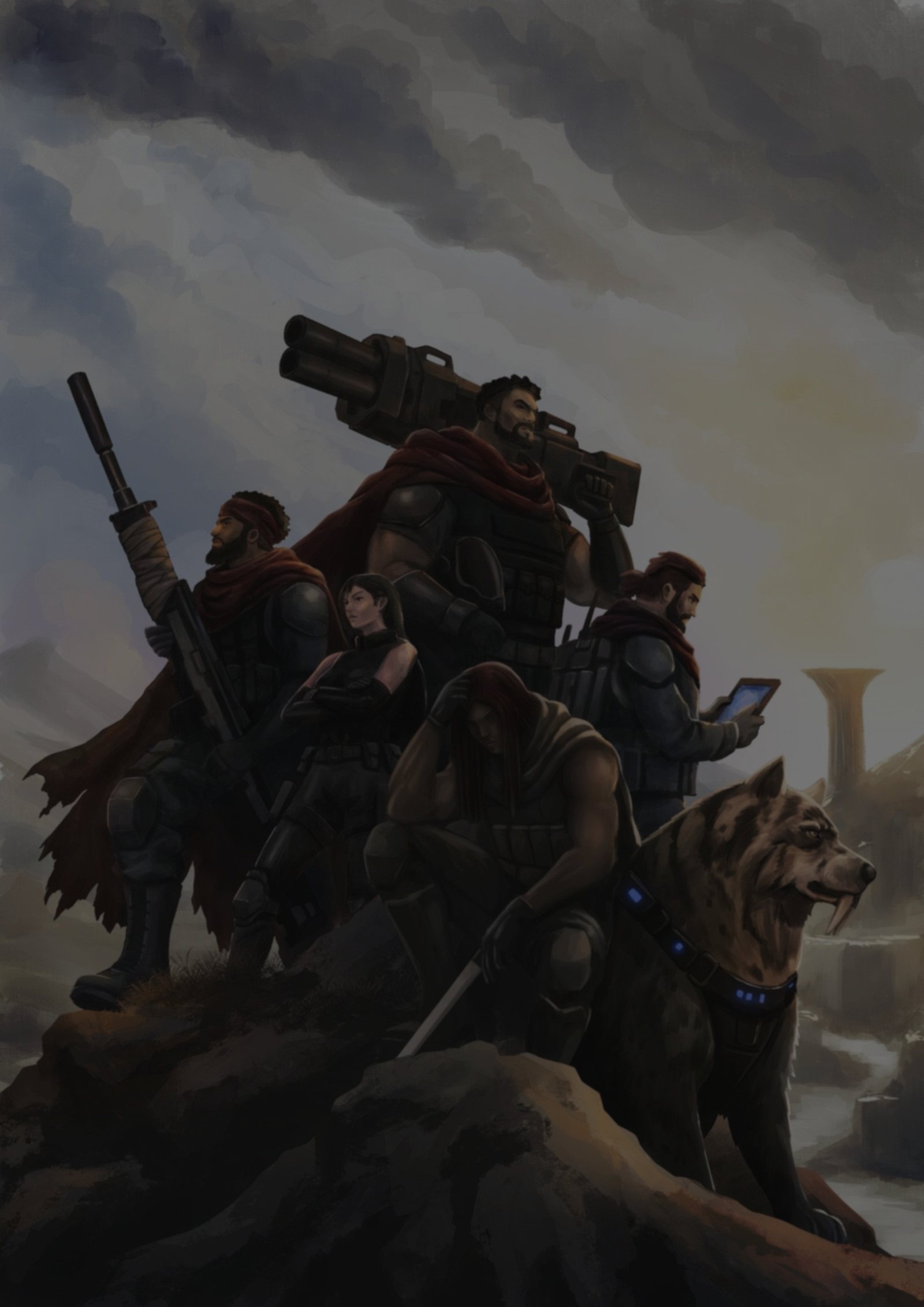
The same boards posting one corridor may be bankrolling the crew across from it. Syndicate crews, independent mercenary companies, and criminal warlords operate throughout contested zones. They include the Jerhit Syndicate, the Children of Kharan, and Teytan, alongside scattered independents and small Engineered crews capable of taking a relay outright if they choose.
Contractor culture does not recognize permanent sides. A protection detail for a new resource one month becomes a relay capture the next. The crew defending an outpost may be asked to destroy one on the following contract. The person who tried to kill you last tour might be standing in line next to you to sign for the same detail, and by the end of it you might be working together as if nothing happened. Loyalty extends to the contract and nowhere else. When the rates shift, the corridor flips, and everyone adjusts.
Experience required and difficulty vary greatly by region. Contracts on the Geban continent are almost always light, such as security for a farm or guarding clearing materials against thieves, and pay five Daer (50,000 Varen) or less. Inland Thazvaar runs on syndicates with private relays, criminal warlords feeding on smuggling lanes and relay gaps, and imperial law stretched so thin it does not reach. Kela contracts focus on expansion into the uncharted and locating new energy sources, even though northern Kela remains a mostly unknown black zone. Manalheim is resource rich, but the environment reclaims everything. Nature takes back infrastructure almost immediately, so anything beyond small outposts and hubs is impossible to maintain without a super spine, and super spines cannot be built in the modern era. Contracts reaching Ukhaalstaag are almost always engineer protection details against Ukhaal Walkers. They pay extremely well but expect contractors to arrive with their own teams and vehicles. A completed inland contract may yield 400 Auren (40 million Varen).
Solarn hires only highly experienced veterans to escort relay engineers on protection details. The work is among the most dangerous available and among the most consequential, since every corridor that holds expands the reach of the grid and the economy it carries. Imperia Research issues no contracts directly but is indirectly responsible for roughly ninety percent of the intelligence shaping operations across all factions.