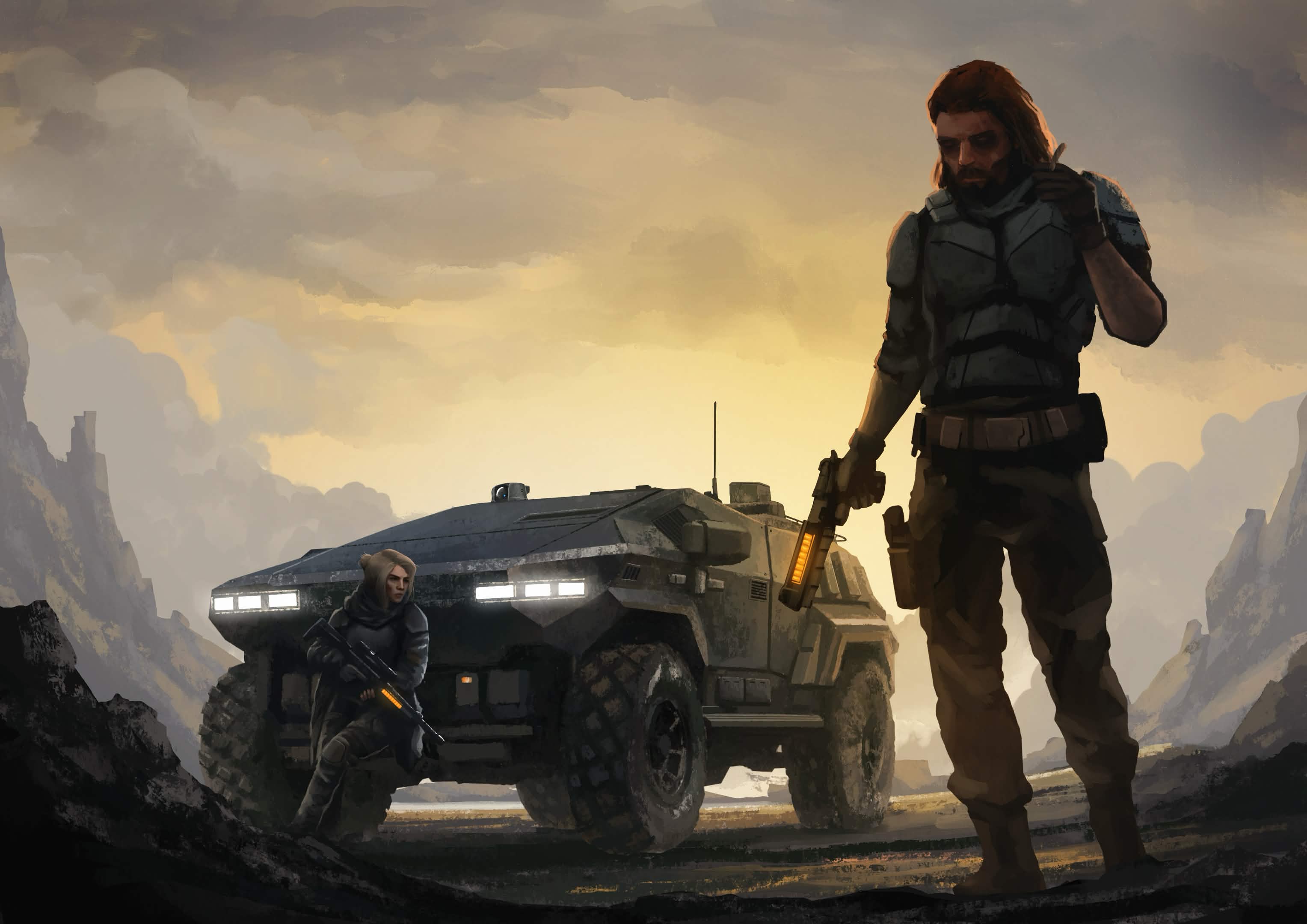
Vaer'karesh
Founder of the Empire
Origins
Vaer'karesh was not a large man. He did not descend from any recognized family or bloodline of status. Where he came from is unknown, and after six thousand years of imperial scholarship the question remains unanswered. He arrived at Thaloryn with a small party of people who clearly did not come from one place. Their clothing suggested origins in different regions, some of their garments appeared to not even be from the continent, and their sizes and skin tones indicated multiple populations. His inner circle numbered only seven, including himself, and only three of them were known as warriors. What made his party effective was that they were outsiders from nowhere. They had no allegiance to any of the five nations, no history with them, no grudge, and no debt. Every nation on the continent had reasons to distrust every other nation. Vaer'karesh and his companions were the only people who could walk into all of them without carrying that weight.
Unification
He presented his case to Thaloryn first. They were receptive because they already wanted unification but had no military leverage to achieve it. He went to Garnath, who told him to leave. He went immediately to Beithon, who attempted to kill him. While he made his diplomatic approaches openly, his companions were doing something else entirely. They embedded themselves inside the nations, entering courts, working alongside laborers, joining engineering circles, learning how authority moved through each population from within. Because the party belonged to no nation and carried no allegiance, they could assimilate anywhere without being identified as enemies. By the time Vaer'karesh returned to any nation for a second visit, his people were already inside.
He traveled to Varena and explained that their structures, roads, buildings, monuments, and the systems they had built to connect the continent would be destroyed if they did not act. Varena was convinced. He returned to Garnath, where three generals challenged him directly to duels, as their culture demanded. It remains unknown how a man of his size defeated three men far larger and more experienced than himself, but he did. After the duels, the leaders of Garnath traveled with him to Thaloryn's capital.
Beithon arrived at Thaloryn's capital in airships to warn everyone of a massive foreign power they had discovered to the east with enormous ships carrying weapons unlike anything the five nations possessed. Everything was diplomatic until they saw Garnath's representatives present, and fighting broke out in the court districts. Vaer'karesh and his inner circle intervened to stop the violence.
War with Beithon
After several failed attempts at cooperation, Beithon decided they did not want to be part of any unified nation and attempted to conquer the continent. They forced Thaloryn into temporarily siding with them before Vaer'karesh managed to pull Thaloryn out. By then, Thaloryn's capital was half destroyed and all of their meaningful leadership had been killed. Vaer'karesh had saved them. They accepted him as their leader, giving him control of an entire nation. This was the true start of the unification. From Thaloryn he had economic power and infrastructure. From Varena he already had numbers and a labor force building weapons.
A full invasion of Beithon was launched. Beithon retaliated with air raids that devastated the countrysides of Varena, causing food shortages across the entire continent. Thaloryn officially declared Vaer'karesh Emperor, the first in history. Varena followed. The leaders of Garnath were mysteriously assassinated. Vaer'karesh found enough remaining support within Garnath for them to accept him. Garnath and Varena marched on Beithon. Beithon surrendered. It was discovered that Beithon's actual leaders had been dead long before the surrender, and the factions that had kept the war going were in control, not the legitimate leadership. The civilians of Beithon accepted Vaer'karesh quickly once those factions were removed. Rupturan ruins were discovered in Beithon's territory, and the technology found there would become the foundation for what eventually became the planetary relay system.
Vaer and Ashan
The man who unified the continent was Vaer'karesh. The emperor who ruled it became Ashan'Vaer Karesh. Upon establishing the empire he adopted the prefix "Ashan" to initiate the imperial bloodline and mark the beginning of a new order, a naming convention that would endure through every emperor who followed. Over six thousand years, the two identities separated in the public imagination. Most people on the planet think of the unifier and the emperor as different figures entirely: Vaer'karesh the man who built the world, and Ashan'Vaer Karesh the sovereign who ruled it. They are the same person.