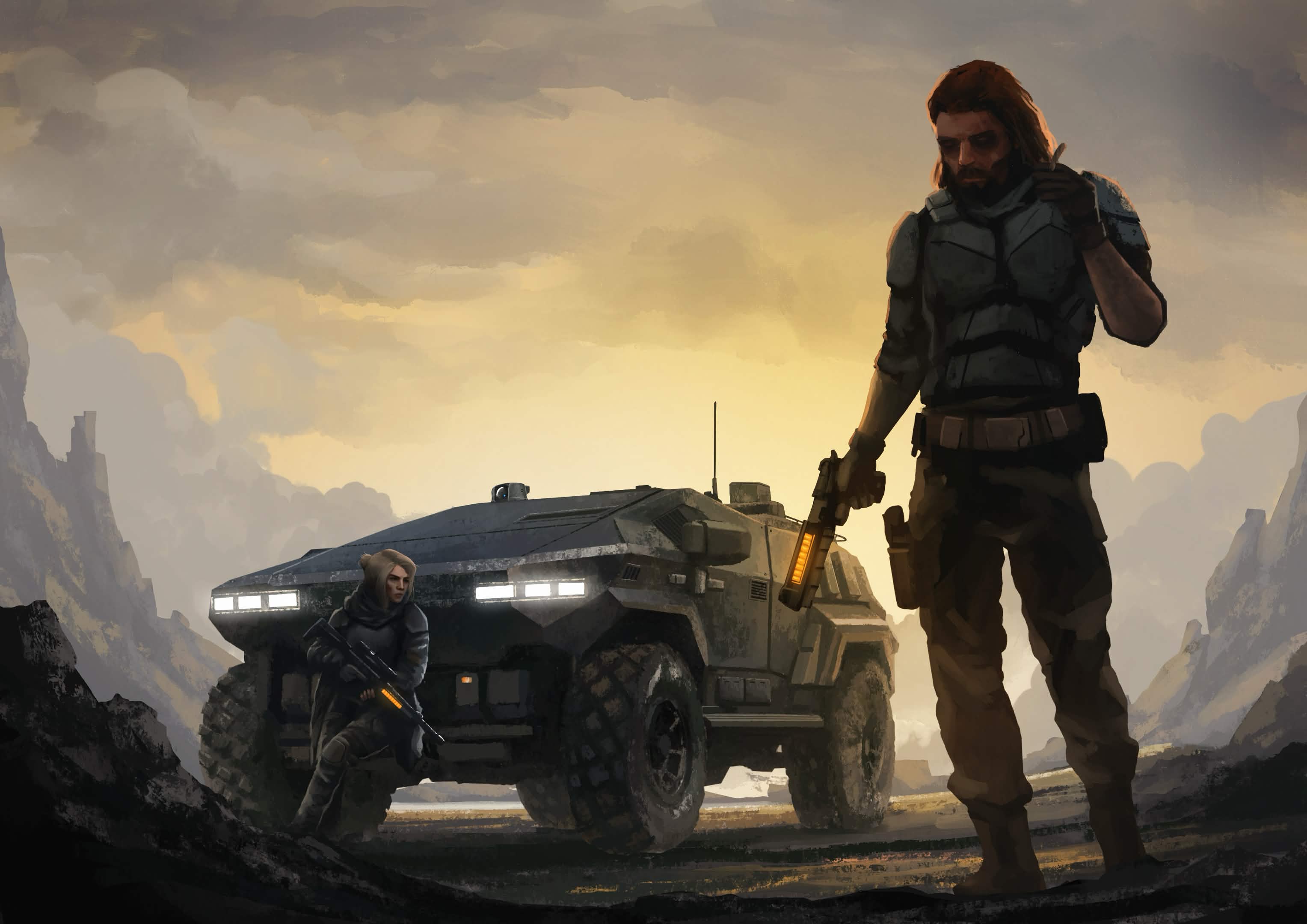
Varethis'Auren Kel'varesh
The Last Emperor
Dreamer
From a young age it was clear to Emperor Ashan'Kael Varethis that his son Auren would ascend. Convenience and birth order had nothing to do with it. He was chosen for a mind that carried a clarity and conviction the empire had never seen in a single ruler. Auren thought past the next reign and the next campaign, to what the species could become if it stopped spending itself on conquest, and he was the first emperor in six thousand years to look at the imperial machine and conclude that its purpose had run out.
Brothers
His brother, Prince Varethis'Daer Venar, stood beside him in something close to reverence. Where Auren carried the vision, Daer carried the technical brilliance required to make it real. Daer's intellect made even the most accomplished imperial minds feel provincial, and he turned that intellect entirely toward manifesting his brother's ideals. Together they brought the planet the closest it ever came to true, lasting stability. The youngest of their siblings, Varethis'Kaelera, grew up inside the gravity the two of them generated, loved by the public in her own right but always measured against an emperor's popularity and a genius's brilliance.
Engineered as Citizens
Auren's defining work was the elevation of the Engineered from instruments to citizens. He codified the framework that granted them names, rights, and futures, legitimizing Engineered citizenship and ending the doctrine that had treated them as living equipment. He envisioned a post-conquest era of technological advancement, biological evolution, and a world no longer bound by the logic of dominion. He dreamed of spacefaring advancement and a planet at peace with itself. For a brief period, with his brother's engineering and his own conviction driving the imperial apparatus, that future looked possible.
Assassination
The empire, unwilling to change, turned against him. The interests that had been built over six thousand years of conquest did not want a post-imperial world, and they did not want an emperor who treated the Engineered as people. Auren was assassinated by betrayal from within the structure he ruled. His death shattered the throne and ignited the Fracture, the planet-wide collapse of imperial authority that ended the age of emperors. He is remembered as the last sovereign who believed in something beyond dominion. The planet came apart quickly after his death, because so much of it had been held together by him alone.