← Back to Characters
Vohk’tirrel – Vesselborn Codex

Vohk’tirrel

Scout-Class Engineered and Companion to Zairen Vaul

Alias: Vohk

Era: Modern Geba

Affiliation: Church of the Infinite Maw

Role: Scout and Early Companion

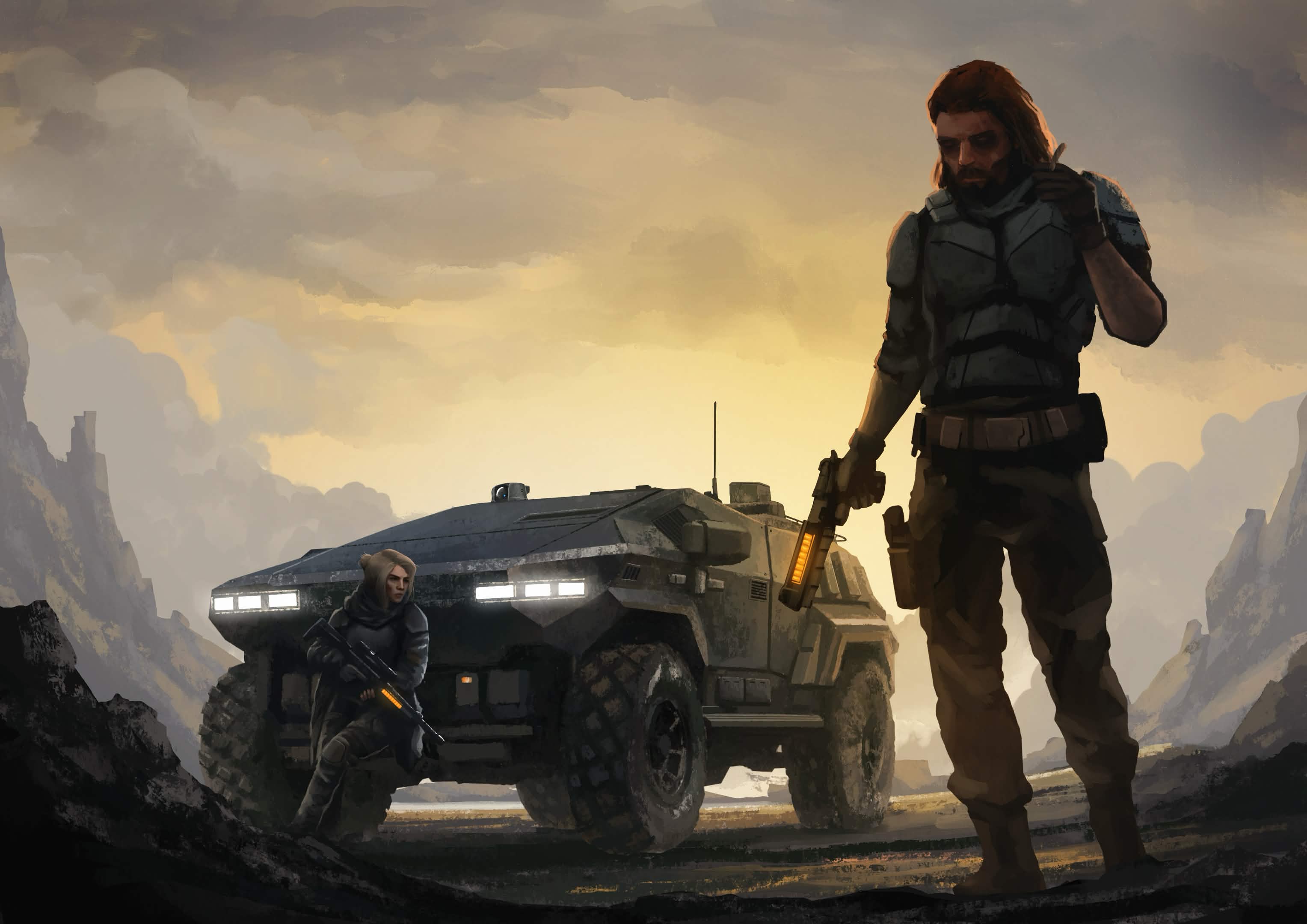
Vohk’tirrel, known as Vohk, is a Scout-Class Engineered who evaded conscription throughout the Warlord Eras. He survived alone in dense forests and ruins for nearly twenty years, moving between patrols with precise timing tied to all variations including breath cycles, weather shifts, and insect migrations.

After the wars ended he emerged lean, quiet, and unreadable. He joined Zairen Vaul at the small stead on the ruined city’s edge. They worked side by side clearing debris and building shelter. Vohk was not initially drawn by belief but by shared rhythm in labor. Over time he became Zairen’s first true friend through mutual endurance, quiet laughter, and companionship.

When the Entity appeared, Vohk stood beside Zairen and accepted it without surprise or fear. As the Church of the Infinite Maw grew, he organized scouting parties, mapped terrain for expansion, and identified wartime ruins for reclamation.

His senses exceed even those of most Scout-Class Engineered. He tracks heat, motion, vibrations, and pheromones with layered precision focused on perception rather than aggression.

Years later, bored by the preserved perfection of the Maw’s Crown, Vohk left to lead a private company of trackers in search of Zairen’s unknown father. The mission was driven purely by personal loyalty.

Vesselborn Codex — Vohk’tirrel

About Vesselborn

Vesselborn is the story of Geba — a world that has carried an empire for six thousand years.

It begins with Vaer’karesh, who unites five nations into the first empire and fixes a common language and law. Across the ages, the empire fights and finally breaks Thazvaar, welcomes Jeyrha through engineering and diplomacy, and liberates Berinu by choice. In Ngorrhal, the people of the mountain passes lose their ancestral name and are permanently renamed the Frost Sentinels, whose strength helps secure imperial rule. The Haavu cannon systems cement that dominance.

At its height, the empire spans continents and raises relay towers that bind cities, coasts, and passes into one network. Assassinations and civil wars follow — the Fracture — but the answer is not a vacuum. The Shadow Rule forms from imperial networks and manufactures peace, ending the warlord broadcasts and taking the world back from collapse. They are the empire made quiet: continuity without ceremony.

Today, the Shadow Rulers still govern from the background while the Energy Wars — covert struggles over power grids and relays in uncivilized regions — decide who controls energy, transport, and culture.

Stories range from relay-field defenses and inland recoveries to city governance and frontier resettlement; from rail lines and air programs that stitch regions together to festivals and work crews where culture and politics collide; from Frost Sentinel memory to families choosing the safety of hub clearings or the risk beyond the grid.

This is Geba.
It began in silence.
It has not yet ended.