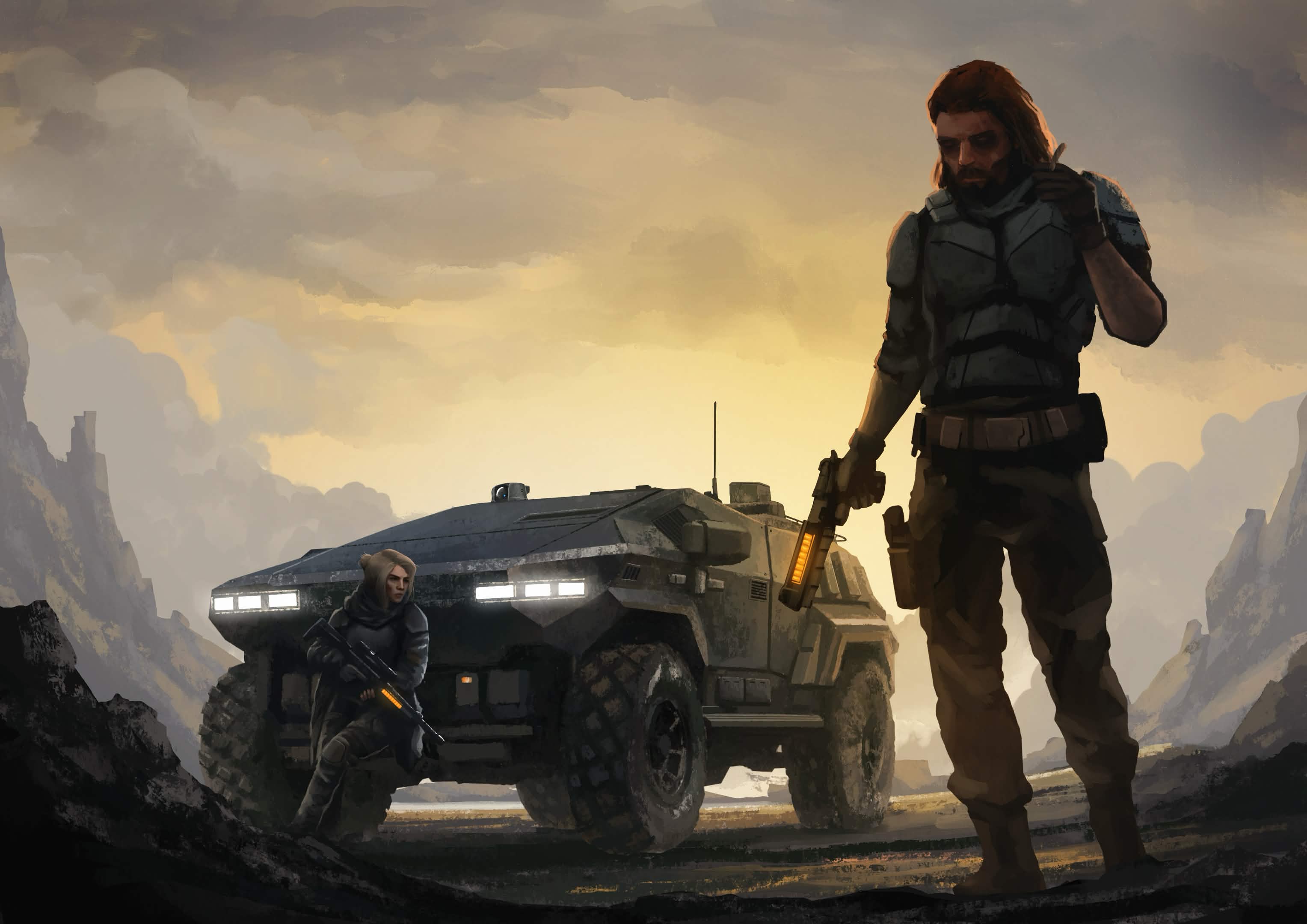
Varenth Solarn
Architect of the Relay System
Varenth Solarn was an imperial architect of the Era of Early Dominion who established the first relay systems in Ngorrhal, the first major relay works raised outside the origin continent. He was Jeyrhan by heritage, born and raised on the Geba continent, and descended from the southern immigrants brought to the continent by Therik during the era before unification. Those immigrants had crossed two oceans, spoke the common language with heavy accents, carried knowledge no one on the continent possessed, and settled in Varena where they were accepted openly. Their descendants were described as the people who would eventually produce the planetary relay system. That description ends with Varenth. The Rupturan technology found in Beithon's territory had provided the conceptual foundation for relay infrastructure. The knowledge his ancestors brought from across the southern ocean provided the rest. Those foundations became the relay system that would carry nearly everything meaningful on the planet: governance, identity, coordination, memory, entertainment, commerce, and eventually war, at continental and then planetary scale.
He traveled to Ngorrhal as part of Prince Vaer'gidon's expedition during the Ngorrhali Unification Wars. He was present when imperial scouts found a wounded Western Pass woman whose account revealed the Thazvaari Dominion's involvement in the Northeastern conflict. The relay outpost built near the Western Pass that gave the Frost Sentinels fast communication for the first time was his work, constructed during an active war in territory where the Empire had never operated. After the war, his relay infrastructure made Ngorrhal home to the largest and highest relays on the planet and the center of experimental relay technology. The ultra-high-altitude work that would kill him was the furthest extension of what he had started there.
He died during the first trials of an ultra-high-altitude relay. He and his crew relied on primitive life-support suits at altitudes where no one had worked before. The system was driven at unprecedented power and the experiment triggered an artificial geomagnetic storm violent enough to collapse their life support. At that height there was no rapid evacuation. Nothing could reach them through the storm, and even without it the airships of the era could not operate at such altitudes. Once their systems failed there was no descent and no rescue.
People later realized the test was a success. That relay never went offline. The technology proven at the cost of his life made it possible for relays with extraordinary range to exist, relays that could cover distances no ground-level installation could match. In the eras that followed, as more of these ultra-high systems were constructed across the planet, they created an unprecedented capacity for the transference of information and influence across continental distances. The relay network as it exists in the modern era, the system that carries every broadcast, every contract, every transmission that holds the planet together, descends from what Varenth built and what the test that killed him proved was possible.
The engineering lineage that carried his name grew across the centuries that followed. It formalized during the Era of Absolute Expansion and became an official manufactory under the Varethis Advance during the Era of Late Conquest. Caledrin Solarn-Veykar accompanied Prince Raeth across the fractured Empire during the Era of Absolute Expansion, cataloging which relays had failed and which could be recovered, sending reports back through the very system he was repairing. Ayitha Solarn turned the relay network into an environmental monitoring system during the Era of Early Stagnation, producing the atmospheric sensor work that led to the Geban Calendar. Heredrin Solarn-Veykar founded Veykar Propulsion through investment rather than engineering, turning failed escape projects into the entertainment and propulsion empire that dominates the modern cultural economy. Yelidra Veykar is the sole living heir of the Solarn-Veykar lineage. Solarn Legacy Engineering still owns and maintains every public relay on the planet. The system Varenth started with primitive equipment in the Ngorrhali mountains is the nervous system of civilization on Geba, and every signal it carries passes through infrastructure that began with him.